
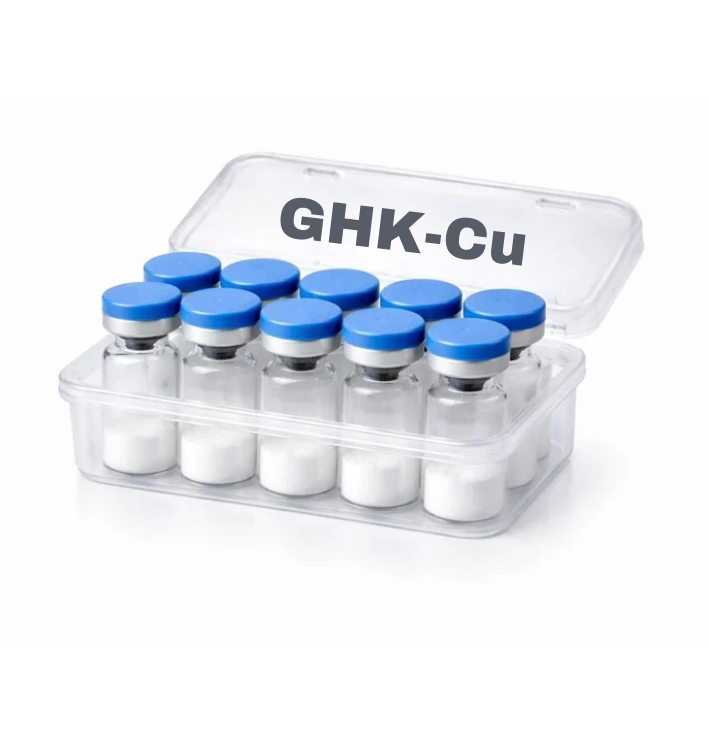
GHK-Cu (Glycyl-L-Histidyl-L-Lysine copper complex) is a naturally occurring copper-binding tripeptide found in human plasma, saliva, and urine, with circulating levels that decline with age. This small, stable peptide (molecular weight: 401.9 Da) forms a characteristic blue-colored complex when chelated to copper ions (Cu²⁺). In controlled laboratory settings, GHK-Cu is used as a high-value tool to investigate multiple biological processes, including upregulation of collagen and elastin synthesis, modulation of antioxidant enzymes (e.g., SOD, catalase), promotion of wound healing and tissue remodeling, and regulation of gene expression networks linked to tissue repair and inflammation. Supplied as a distinctive blue lyophilized powder, this research-grade GHK-Cu complex is intended strictly for non-human, in vitro and in vivo studies exploring skin regeneration, anti-inflammatory responses, and connective tissue homeostasis in experimental models.
Complete Research Kit Contents & Verification
Each GHK-Cu order ships as a complete experimental package optimized for standardized research in dermatology, wound healing, and tissue engineering:
-
Primary Research Compound:
10 sterile glass vials, each containing 50 mg of lyophilized GHK-Cu peptide complex (total 500 mg), presenting as a characteristic light blue to turquoise powder. -
Reconstitution Solution:
30 mL vial of sterile Bacteriostatic Water (0.9% benzyl alcohol) for preparation of stable peptide solutions for experimental use. -
Laboratory Administration Tools:
Pack of sterile 1 mL insulin syringes (29G × 1/2″) for precise measurement and transfer in accordance with research protocols. -
Sterilization Supplies:
Individually wrapped alcohol prep swabs to maintain aseptic technique during vial handling and reconstitution. -
Research Protocol Documentation:
-
Dosing Schedule: Standardized administration protocol for common research models, with emphasis on dermatological applications, wound healing studies, and connective tissue research.
-
Usage Instructions: Comprehensive guide covering reconstitution calculations, storage conditions (stable at room temperature; −20 °C recommended for long-term), handling safety, and experimental best practices for topical or systemic research applications.
-
-
Quality Verification – Certificate of Analysis (CoA) per Batch:
-
Peptide purity: >98% by HPLC
-
Copper content analysis: theoretical ~15.8% by weight; verified by ICP-MS or colorimetric assay
-
Identity confirmation: mass spectrometry for peptide; AAS/ICP for copper
-
Sterility testing results
-
Endotoxin levels: <10 EU/mg
-
Absorbance spectrum confirmation: characteristic peak ~254 nm for copper complex
-
Residual solvent and moisture analysis
-
Color verification: blue complex indicates proper chelation
-
Research Applications & Scientific Utility
In laboratory environments, GHK-Cu supports investigation across multiple domains related to tissue regeneration, protection, and remodeling:
-
Collagen & Elastin Synthesis:
Study of collagen types I, III, and IV production in fibroblast and keratinocyte cultures, and of elastin synthesis and elastic tissue remodeling in skin models. -
Antioxidant & Anti-Inflammatory Mechanisms:
Evaluation of GHK-Cu–mediated modulation of antioxidant enzymes (e.g., SOD, catalase) and anti-inflammatory pathways in oxidative stress and injury models. -
Wound Healing & Scar Modulation:
Research into accelerated wound closure, granulation tissue formation, and reduced scarring in animal and ex vivo wound models. -
Hair Follicle & Dermatology Research:
Examination of hair follicle growth, cycling, and density in dermatological and trichology research paradigms. -
Dual-Function Signaling Complex:
Utilization of GHK-Cu as both a signaling molecule (via the Gly-His-Lys sequence) and a copper delivery system, jointly influencing gene networks involved in tissue repair, inflammation control, and oxidative stress response.
Laboratory Handling & Safety Protocol
-
Storage:
Store unopened lyophilized GHK-Cu vials in a cool, dry place. For long-term stability (>1 year), storage at −20 °C is recommended. Reconstituted solutions are stable for several weeks when refrigerated at 2–8 °C and protected from light. -
Reconstitution:
Perform under standard laboratory conditions. The blue powder readily dissolves in bacteriostatic water or saline to form a clear blue solution; gentle swirling is sufficient. -
Laboratory Safety:
Standard PPE (lab coat, nitrile gloves, safety glasses) is recommended. While GHK-Cu shows low acute toxicity in research models, copper is a heavy metal and must be handled with appropriate care and containment. -
Visual Quality Control:
The characteristic blue color is a key indicator of proper copper chelation. Loss of blue coloration may signal degradation, oxidation, or copper dissociation, and such material should be excluded from critical experiments.
Critical Compliance & Intended Use Disclaimer
THIS PRODUCT IS SOLD FOR RESEARCH USE ONLY (RUO). NOT FOR HUMAN OR VETERINARY DIAGNOSTIC OR THERAPEUTIC USE.
-
Intended Use:
GHK-Cu is supplied strictly as a biochemical reagent for laboratory research. It is intended for use by qualified researchers in controlled settings studying connective tissue biology, dermatology, wound healing, and regenerative mechanisms. The included “dosing schedule” refers exclusively to standardized research model protocols. -
Not for Human Consumption:
Under no circumstances is this product intended for administration to humans or animals. It is not a cosmetic ingredient, anti-aging serum, skin treatment, or dietary supplement. The provided syringes and accessories are for laboratory measurement and transfer only. -
Regulatory Status:
This product has not been evaluated or approved by the FDA or any other global health authority for cosmetic, diagnostic, or therapeutic use. Although copper peptides appear in some cosmetic formulations, this specific product is not for cosmetic manufacturing or human use. -
Copper Handling & Disposal:
Researchers are responsible for the proper disposal of copper-containing materials in compliance with local environmental regulations governing heavy metals. -
Researcher Responsibility:
The purchasing individual or institution assumes full responsibility for compliance with all applicable local, state, federal, and international regulations regarding the possession, use, and disposal of research peptides and copper compounds.

Reviews
There are no reviews yet.