
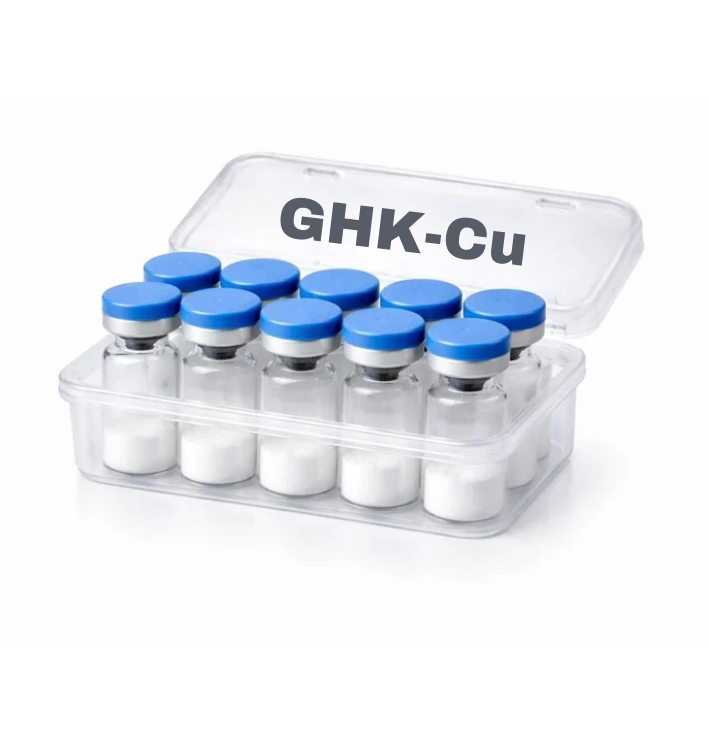
Buy GHK-Cu Peptide UK | Premium Research Grade Copper Peptide
For advanced laboratory investigations into tissue remodeling and cellular regeneration, our GHK Cu peptide offers unparalleled purity and consistency. As a naturally occurring GHK Cu copper peptide, this compound is a primary subject of interest in dermatological and metabolic research. Supplied strictly for laboratory research and development purposes, this product is not intended for human or veterinary consumption.
What is GHK-Cu Peptide?
When researchers ask, “what is GHK-Cu peptide?”, they are referring to Glycyl-L-Histidyl-L-Lysine complexed with copper (Cu2+). First isolated from human plasma in 1973, this tripeptide-copper complex has become a cornerstone in scientific studies focusing on wound healing, collagen synthesis, and antioxidant activity. In laboratory settings, it is valued for its ability to reset the genes of cultured human cells to a healthier, more youthful state, making it a highly sought-after compound for in vitro and in vivo research models.
What is GHK-Cu Peptide Used For in Research?
Understanding what is GHK-Cu peptide used for requires looking at its multi-faceted biological activity. In controlled scientific studies, this compound is primarily utilized to investigate:
- Tissue Remodeling: Stimulating the synthesis of collagen, elastin, and glycosaminoglycans in fibroblast cultures.
- Antioxidant Properties: Neutralizing toxic oxygen radicals and protecting cells from oxidative stress.
- Angiogenesis: Promoting the formation of new blood vessels in wound-healing research models.
- Anti-Inflammatory Pathways: Modulating inflammatory cytokines to accelerate tissue repair in experimental settings.
Research Observations: GHK-Cu Before and After
While commercial marketing often seeks out GHK-Cu before and after photos, scientific literature provides a more rigorous perspective. In published clinical and preclinical studies evaluating GHK-Cu peptide injection before and after treatment phases in research models, investigators have documented measurable improvements in skin density, reduction in fine lines, and accelerated wound closure rates. These observable changes are attributed to the peptide’s ability to upregulate extracellular matrix protein production. Researchers rely on histological analysis and biomarker tracking, rather than anecdotal evidence, to validate these outcomes.
Safety Profile: Is GHK-Cu Safe for Research?
A common inquiry in the scientific community is, “is GHK-Cu safe?” and “is GHK-Cu safe for prolonged experimental use?” Toxicological studies and research data indicate that GHK-Cu exhibits a remarkably high safety profile in controlled laboratory environments. It is naturally present in human plasma, saliva, and urine. However, as with all research chemicals, safety is contingent upon proper handling, accurate dosing calculations, and strict adherence to sterile laboratory protocols. It is not approved for human consumption, and all handling must be conducted by qualified research professionals.
Laboratory Administration Protocols
For researchers designing experimental protocols, understanding standard administration routes is critical. When literature discusses where to inject GHK-Cu in animal research models, the consensus in preclinical studies points to subcutaneous (SubQ) administration. This route allows for steady absorption into the systemic circulation, mimicking physiological delivery.
For laboratory personnel reviewing how to inject GHK-Cu peptide in a research setting, the standard operating procedure involves:
- Reconstitution: Mixing the lyophilised GHK-Cu peptide with sterile bacteriostatic water to achieve the precise target concentration.
- Sterilisation: Using alcohol swabs to sanitize the vial stopper and the research model’s administration site.
- Administration: Utilizing sterile insulin syringes (e.g., 29G or 31G) to deliver the calculated research dose subcutaneously, ensuring minimal tissue trauma.
Disclaimer: This information is provided solely for educational and laboratory research purposes. It does not constitute medical advice or instructions for human use.
Premium GHK-Cu Research Kit Contents
Each order is meticulously prepared to support rigorous scientific inquiry:
- Primary Compound: Lyophilised GHK-Cu (Copper Peptide) powder, >99% purity (verified by HPLC).
- Reconstitution Solution: 30ml sterile Bacteriostatic Water (0.9% Benzyl Alcohol).
- Administration Tools: Pack of sterile 1ml insulin syringes (29G × ½″).
- Sterilisation Supplies: Individually wrapped alcohol preparation swabs.
- Documentation: Batch-specific Certificate of Analysis (CoA) and detailed research handling protocol.
Storage Requirements: Store lyophilised powder at 2–8°C. Once reconstituted, keep refrigerated and protect from light. Do not freeze.
Delivery Information: Dispatched with a cold pack via tracked 2-day UK delivery to maintain compound integrity.
Frequently Asked Questions (FAQs) About GHK-Cu Peptide
Q: What is GHK Cu peptide?
A: GHK Cu is a naturally occurring copper complex of the tripeptide glycyl-L-histidyl-L-lysine. In scientific research, it is extensively studied for its role in tissue remodeling, collagen synthesis, and antioxidant activity.
Q: What is GHK-Cu peptide used for in laboratory settings?
A: In research, GHK-Cu is used to investigate wound healing, extracellular matrix production, angiogenesis, and the modulation of inflammatory pathways in in vitro and in vivo models.
Q: What do clinical studies show regarding GHK-Cu before and after treatment phases?
A: Published research evaluating GHK Cu peptide injection before and after experimental periods notes measurable improvements in tissue density, collagen production, and accelerated wound closure in research models, validated through histological analysis.
Q: Is GHK-Cu safe for research purposes?
A: Toxicological data indicates that GHK-Cu has a high safety profile in controlled laboratory settings, as it is a compound naturally found in human plasma. However, it must be handled strictly by qualified professionals under sterile conditions.
Q: Where do research protocols indicate to inject GHK Cu?
A: In preclinical animal studies, the standard route of administration documented in scientific literature is subcutaneous (SubQ) injection, which allows for optimal systemic absorption and bioavailability.
Q: How do researchers handle and inject GHK Cu peptide in the lab?
A: Laboratory protocols for how to inject GHK Cu peptide involve reconstituting the lyophilised powder with bacteriostatic water, sanitizing the site with alcohol swabs, and using sterile insulin syringes to administer the precise, calculated research dose subcutaneously.
No schema found.

Reviews
There are no reviews yet.